Systems & Verification · May 1, 2026 · 2 min read
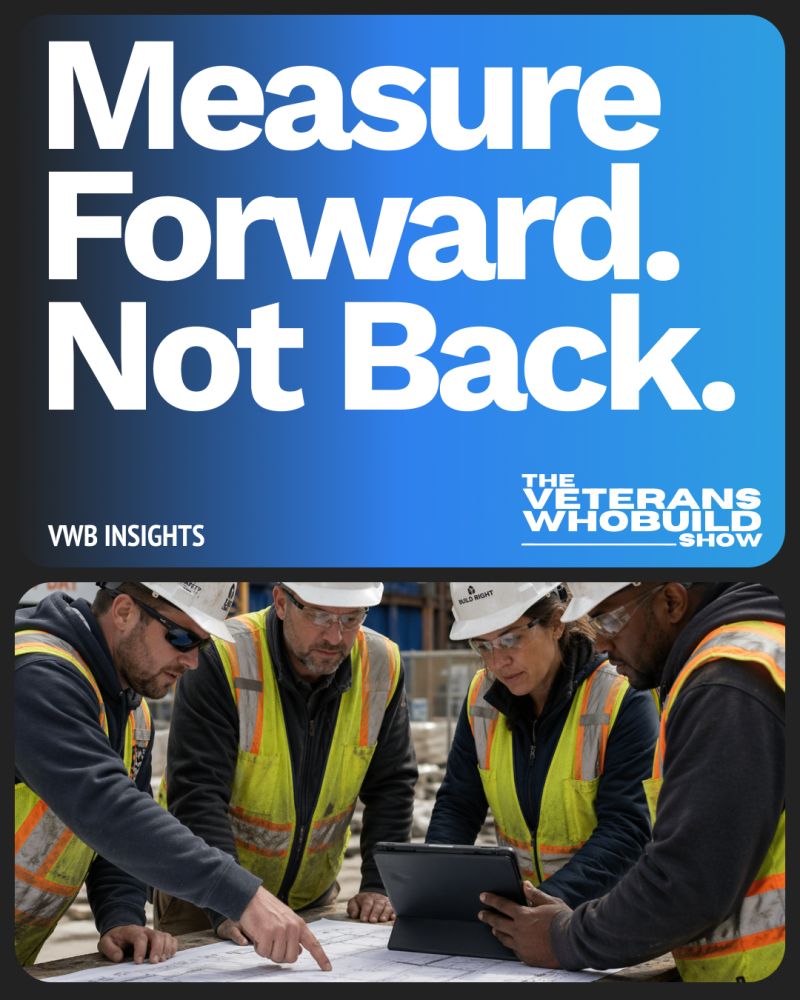
Measure Forward. Not Back.
By Adam Stark
Field Notes No. 01 — from The Veterans Who Build Show
Construction measures backward.
Cost overruns. Missed milestones. Claims filed. By the time the numbers arrive, the project has already paid the price. Every metric the industry leans on tells you what went wrong after it’s too late to do anything about it.
Military operations measure forward.
Readiness. Preparedness. Whether the next unit has what it needs before the handoff happens. The question isn’t did we hit the target — it’s are we positioned to hit the next one. That distinction reshapes how decisions get made and when they get made.
The Review Problem
The same gap shows up in how the industry handles things going wrong.
When a project slips, the default response is to assign fault. Someone missed something. Someone didn’t communicate. Someone should have known. The conversation collapses into accountability theater, and the actual lesson — the why underneath the what — gets buried with it.
Military after-action reviews work differently. They separate what happened from who’s responsible. The goal isn’t to find a person to blame. It’s to bank the lesson so the next team doesn’t repeat it. The review itself is the deliverable, not the punishment.
Construction keeps losing ground on the same issues partly because there’s no equivalent practice. Lessons live in one person’s head. Or they disappear into a closeout folder no one opens again. The next project starts from scratch — and predictably runs into the same problems the last one did.
What the Teams Pulling Ahead Are Doing
Two patterns keep showing up among the teams that consistently outperform:
They measure readiness, not just results. Leading indicators — whether the next phase has what it needs, whether the handoff is set up to succeed — get tracked the same way budget and schedule do. The team knows where they’re exposed before the exposure shows up in the numbers.
They treat every issue as a learning artifact, not a liability. When something goes sideways, the response isn’t to bury it. It’s to capture it in a format the next team can actually use. The lesson outlives the project.
That’s not a cultural shift. It’s an infrastructure one.
The teams doing this didn’t get more disciplined people. They built systems that surface forward indicators and capture lessons in formats that travel. The behavior follows the infrastructure, not the other way around.
Field Notes is a weekly series drawing patterns from conversations on The Veterans Who Build Show and observations from inside the construction industry.