Systems & Verification · May 20, 2026 · 4 min read
Verification Isn't an Act. It's a Cadence.
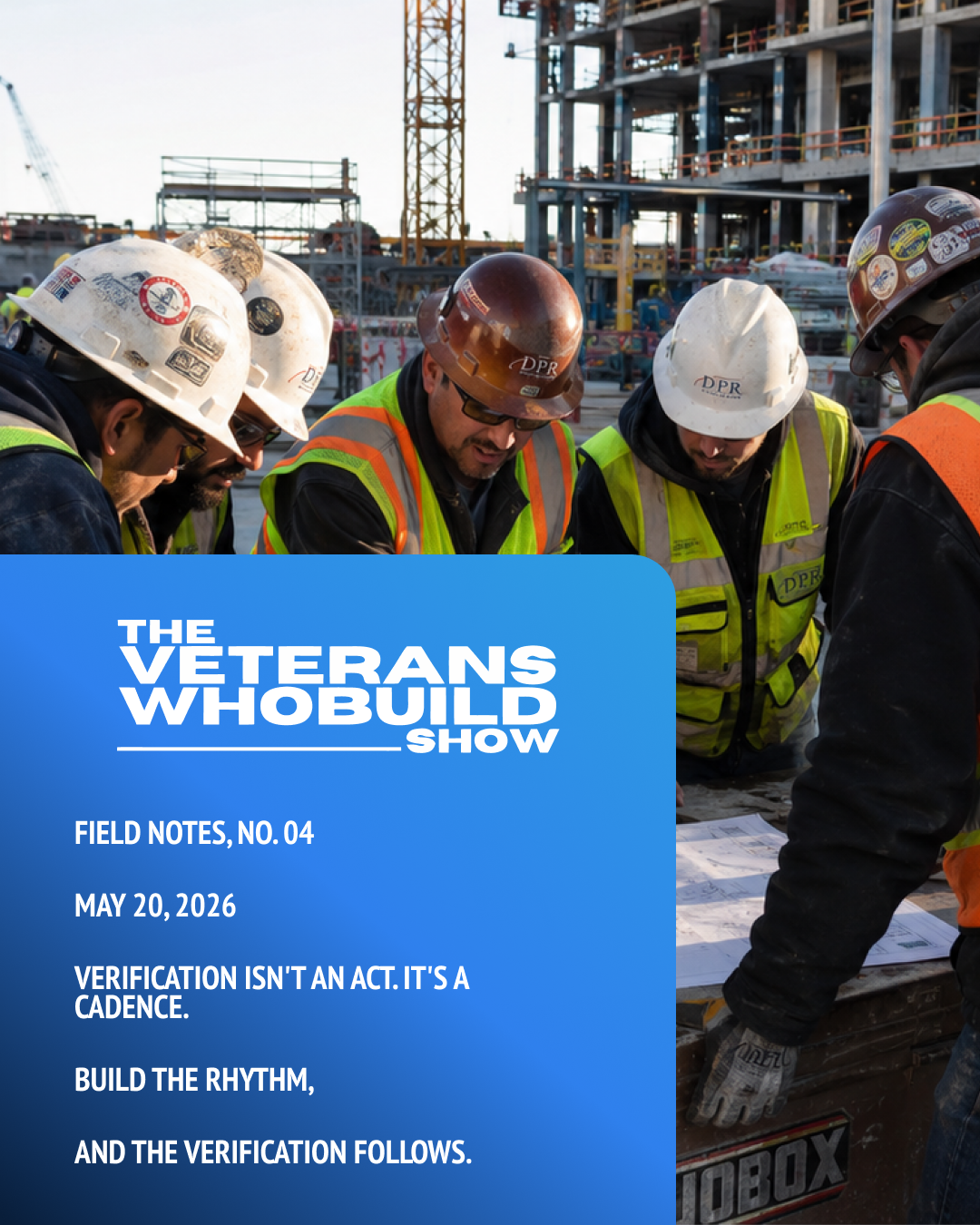
Field Notes No. 04 — from The Veterans Who Build Show
By Adam Stark
When a project goes sideways, the postmortem often surfaces a moment where someone could have caught the issue — and didn’t.
The instinct is to fix the person. Be more careful. Pay closer attention. Don’t assume next time.
That instinct misses the actual fix.
Two Models of Verification
Military operations don’t rely on individuals heroically catching things. They rely on rhythms.
Daily comms checks. Weekly readiness reports. Pre-mission briefs. After-action reviews. Each one a recurring touchpoint with a defined purpose. The cadence is what surfaces gaps before they become consequences — not the diligence of any one person.
The logic underneath it: humans are imperfect verifiers. Memory fades. Attention drifts. Priorities shift. A system that depends on someone remembering to check at the right moment will eventually fail, because the right moment isn’t always obvious in advance. The rhythm removes the dependency on individual recall.
Construction often runs the opposite way. Verification happens when someone remembers to check. When something feels off. When a major milestone forces the question. The rest of the time, verification is implicit — a quiet assumption that things are progressing as planned.
That works until it doesn’t. And when it stops working, the cost shows up downstream in rework, slips, and claims.
What a Rhythm Actually Looks Like
A verification rhythm isn’t a meeting. It isn’t a checklist sent around for signatures. It’s a recurring operational touchpoint with three things attached: a defined cadence, a defined scope, and a defined owner.
Daily huddles with constraint checks. The team gathers at the start of the day. The question isn’t what are we doing today — it’s what could stop us from doing today’s work, and is it cleared? The cadence is daily. The scope is the next 24 hours. The owner is the superintendent.
Weekly lookaheads with readiness verification. Looking three to six weeks out, what activities are scheduled, and which constraints need to be removed before they start? The cadence is weekly. The scope is the look-ahead window. The owner is the project manager.
Pre-pour walks. Before concrete arrives, someone walks the formwork, the rebar, the embeds, the inspection signoffs. The cadence is event-driven. The scope is the specific pour. The owner is named in advance.
Pre-handoff signoffs. Before one trade transitions to the next, the receiving party verifies the conditions they need are in place. The cadence is event-driven. The scope is the specific handoff. The owner is the receiving trade’s lead.
None of these are exotic. Most teams do versions of them. The difference between teams that benefit and teams that don’t isn’t whether the rhythms exist — it’s whether they’re treated as rhythms or as occasional events.
Why Cadence Matters More Than Diligence
The instinct in construction, when something goes wrong, is to look for the individual who should have caught it. That person exists. The question is whether they were operating inside a system that gave them the rhythm to catch it — or whether they were expected to catch it through individual vigilance alone.
Individual vigilance is a coping mechanism for the absence of a system. It works in short windows, on small projects, with experienced people. It scales poorly. As projects grow in complexity and as teams turn over, the heroic-individual model breaks down faster than most organizations realize.
Rhythms scale. A daily huddle works the same way whether the project is a tenant fit-out or a hospital tower. A pre-pour walk has the same structure whether the pour is fifty yards or five hundred. The infrastructure is the recurring touchpoint, not the individual standing at the touchpoint.
Last week’s Field Notes — Ready Isn’t a Date — made the case that readiness is a verified state, not a calendar event. This week’s argument is the natural follow-on. Verification only works when it’s a cadence. Otherwise the state never actually gets checked.
What the Teams Pulling Ahead Are Doing
Three patterns keep showing up among teams that have built this well.
They make the cadence explicit. When the verification happens, what gets checked, and who owns the check — all defined in advance. Not improvised, not implicit. The team knows when the next rhythm is coming and what it’s going to surface.
They protect the cadence from erosion. When the project gets busy, the first thing to drop is usually the recurring verification touchpoint. The huddle gets skipped. The lookahead becomes a quick scan. The pre-pour walk turns into a sign-off without a walk. Teams pulling ahead recognize that protecting the rhythm during the hard weeks is what keeps the project from getting harder.
They close the loop. A rhythm without follow-through is theater. When the verification surfaces a gap, something happens. The work waits. The constraint gets escalated. The team adjusts. The rhythm only earns its weight if the outcomes of the verification actually change behavior.
That’s not a discipline problem at the individual level. It’s an infrastructure one — the same shift this series keeps returning to. Build the rhythm, and the verification follows. Skip the rhythm, and you’re depending on someone remembering to look.
Verification doesn’t fail because people aren’t careful. It fails because the rhythm isn’t there.
Field Notes No. 03 — Ready Isn’t a Date — covered what readiness actually means. No. 05 lands next week and looks at the handoff — the moment where most of these threads get tested at once.